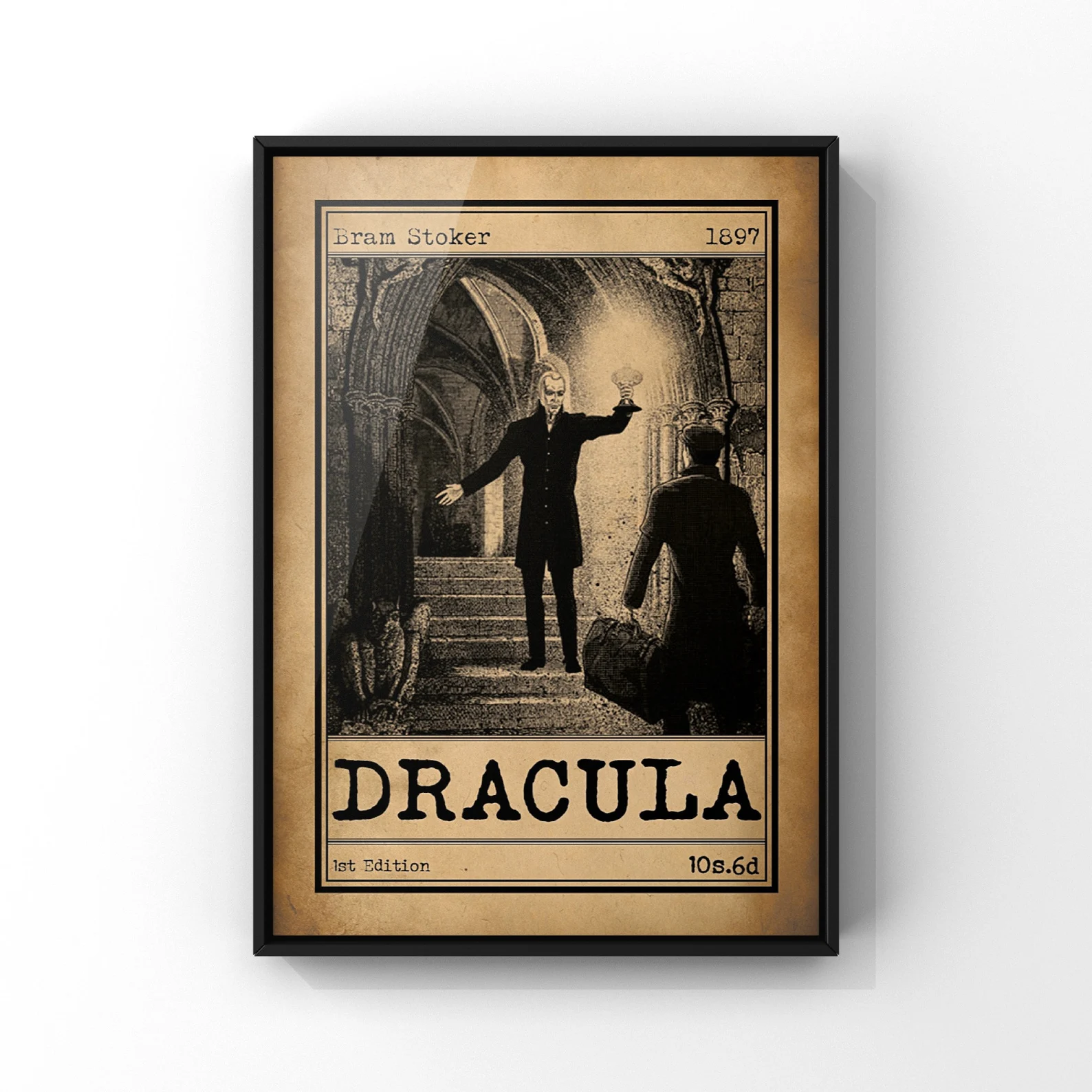
So, you do not know why the book, Never Ceese, fits the worldview of Roman Catholic Christianity? Well, let Father Orthoduck tell you. But, let Father Orthoduck warn you that there is some heavy theology ahead.

OK, here is the theology. All Christians agree that the Fall has damaged humanity, but they do not agree on what it all means.  Both the East and the West agree that Free Will has been damaged, as versus the Pelagians who insisted that Free Will was undamaged. The West, by and large, has gone with Saint Augustine of Hippo’s version of what the Fall has meant. The West has a conception of Original Sin which the East has nicknamed Original Guilt. Now, the details are not important for the purposes of this post. Suffice it to say that the transmission of Original Sin, or hereditary guilt, was physical transmission. The transmission of this hereditary guilt is a form of traducianism:

In Christian theology, traducianism is a doctrine about the origin of the soul (or synonymously, “spirit”), in one of the biblical uses of word to mean the immaterial aspect of man (Genesis 35:18, Matthew 10:28). Traducianism means that this immaterial aspect is transmitted through natural generation along with the body, the material aspect of man. That is, an individual’s soul is derived from the souls of the individual’s parents. This implies that only the soul of Adam was created directly by God (with Eve’s substance, material and immaterial, being taken from out of Adam), in contrast with creationism (not to be confused with creationism as a belief about the origin of the material universe), which holds that all souls are created directly by God (with Eve’s substance, material and immaterial, being taken from out of Adam).

Thus, in traducianism, the act of begetting a child transmits a body that is composed of both the father and the mother (and this was pre-genetics, too). It also transmits a soul, “derived from the souls of the individual’s parents,” but, in the West, it also transmits sin. Let Father Orthoduck be clear, in the West, it is not simply a damaged human nature that is transmitted, sin and guilt are transmitted. (This is not the way in which either Eastern or Oriental Orthodoxy explain it.) This means that, for the West, the child is a sinner from the day of its conception, while it is still in the womb, before it has done anything right or wrong, and is deserving of hell. This is why the Roman Catholic doctrine of limbo developed. The thought of a baby who is stillborn or dies within a few days of birth being condemned to hell was repugnant to many theologians, and so limbo was a place where a baby (and others, but that is another discussion) could live out eternity in happiness but never be able to experience the joy of God’s presence. (All Protestants have a different explanation for babies. Some Calvinists are willing to say that babies of non-believers may indeed go to hell. Eastern and Oriental Orthodox do not have that problem since they do not believe in Original Guilt.)

SPOILER ALERT DO NOT READ IF YOU PLAN TO READ NEVER CEESE

OK, with that background, let’s look at the transmission of either vampirism or lycanthropy on the book Never Ceese. In the book, both vampirism and lycanthropy are the result of a two fold process. On the physical side, part one of the process appears to be the transmission of pluripotent cells which become or are stem cells of different types and do the physical job of transforming the genetics of the affected person into either werewolf or vampire. A vampire has more pluripotent cells than a werewolf. But, the transmission is not merely that of physical characteristics. Rather, as in traducianism, there is a transmission of an immaterial aspect, and that is what is labeled the “curse” in the book. And, just like in the Western conception of Original Sin, the person who has been attacked is automatically guilty of sin and worthy of hell despite the fact that they have personally done nothing to deserve this punishment. (Neither Eastern nor Oriental Orthodoxy would agree with this conception.) This is a very Augustinian conception.

Father Orthoduck will say that there is a twist to the book Never Ceese that is neither Orthodox nor Roman Catholic nor Protestant. And that is the idea that the curse becomes permanent if you pass on the curse. This means that passing on the curse is the equivalent of the unforgivable sin. Matthew 3 says, “But whoever blasphemes against the Holy Spirit will never be forgiven, but is guilty of an eternal sin.” This is the only twist in the book that slightly disappoints Father Orthoduck. He would have preferred that the book would have been written in such a way that passing on the curse would have required a much stronger act of abnegation rather than being unforgivable. On the other hand, Father Orthoduck must admit that it certainly adds some significant dynamic tension to the book to realize that once one curses someone else one is going to hell with no hope of reprieve. But . . . but . . . but, uhm, that is not a very Christian conception of sin and forgiveness.

There are other touches in the book that put it in the realm of an Eastern Orthodox or Roman Catholic conception of how the world works. These are touches that would not be present in Protestantism. Nevertheless, Father Orthoduck will not cover those in this post.

rss

Father Orthoduck was interested to read the report below from Father Orthohippo: [EDIT ON 07 FEBRUARY: The report appears to be a summary of a post on Orthodox History. org which you can find if you click here.]

The naming of Orthodox parishes, and their Patrons, in the U.S.A. is much more varied than those of Catholic parishes. Much of the difference is due to varied immigration patterns. Theotokos, however, is emphasized much more in Orthodox theology and spirituality than it is in Catholic teachings, for instance. Saints, though often different Saints,are almost equally popular choices.

There were 1,842 parishes in the SCOBA (STANDING CONFERENCE OF CANONICAL ORTHODOX BISHOPS IN AMERICA) study. No Canadian parishes, or monasteries, or any of the Moscow Patriarchate’s few “representation” parishes are included.

The 10 most common parish names:

  1. St. Nicholas (142 parishes / 7.7%)
  2. St. George (139 / 7.5)
  3. Holy Trinity (136 / 7.4)
  4. Dormition or Assumption or some other name for that feast (77 / 4.2)
  5. St. John the Baptist (69 / 3.7)
  6. Ss. Peter & Paul (66 / 3.6)
  7. St. Michael (63 / 3.4)
  8. Ss. Constantine & Helen (39 / 2.1)
  9. Annunciation (39 / 2.1)
  10. St. Andrew (37 / 2.0)

The top three — Nicholas, George, and Holy Trinity — represent 22.6% of all American Orthodox parishes.

Father Orthoduck admits that when he first saw this list, he immediately thought of the movie, My Big Fat Greek Wedding. How many of you remember the scene when Toula’s relatives were being introduced? Do you remember the father saying that the children’s names were “Nick, Nick, Nick, Nick, and Nicky” among others? Yes, it seems that there is quite a bit of truth to that stereotype. Saint Nicholas is our preferred name and our preferred saint.

So, here is to Saint Nicholas, our beloved saint!

copyright

Father Orthoduck was going to post a follow-up on the post “A Christian View of Wall Street” from a several days ago. However, some news came out yesterday that has him fuming. What news?

New York, January 30 — The United States military has stopped evacuations of critically ill patients from Haiti to Florida until it is resolved who will pay for the treatment.

Until now, planes loaded with earthquake victims had been flown out of Haiti to Florida for treatment. But now the U.S. military has halted medical evacuation.

Navy Captain Kevin Aandahl, a spokesman for the U.S. Transportation Command, told Reuters that at this moment all the flights have been stopped.

“If Florida isn’t taking them … and I can’t confirm this, but I think Georgia has made a similar statement, so if we can’t bring them anywhere for treatment, then they’re staying in Haiti,” he added.

The suspension comes after Florida requested the government to freeze medical aid over concerns that there is not enough money to treat them.

As of now, more than 500 people have been treated in the state hospitals. But now the state is asking for federal money to treat victims who do not have insurance.

Sterling Ivey, a spokesperson for Governor Charlie Crist, stated that Florida is ready to treat Haiti victims, but there is a need for a proper plan of action and “reimbursement for the care we are providing.”

This article is one of multiple articles from multiple news agencies all reporting the same thing. Since Father Orthoduck lives in Florida, his sense of shame is acute. There is little doubt that money issues do need to be discussed. But, for the governors of Florida and Georgia to hold sick people hostage to what is essentially a bureaucratic problem is one of the more unethical things that Father Orthoduck has ever heard. People may die because there is a temporary financial argument going on.

Yes, the financial issue needs to be resolved. Yes, maybe more people need to be shifted to other states after they are stabilized. But, these medical flights are often taking critically injured people from a disaster area to where they can be treated. And, the nearest and most easily reachable medical facilities are–guess where–Florida and Georgia.

The outrage has been so bad that today everyone was quickly backtracking. Father Orthoduck feels for Captain Aandahl who had to pretend that he knew nothing, just like Sargent Schultz from the TV show of yore, Hogan’s Heroes. President Obama insists that it is a very temporary logistical problem, in other words, he is providing some political cover for the governors. Governor Crist is now saying that he never refused to take patients. Now, let Father Orthoduck be very honest. If Father Orthoduck has to choose between believing Captain Aandahl’s version or Governor Crist’s version, uhm, I will go with the military guy over the politician any day.

Meantime all Father Orthoduck can think about is the parable of the Good Samaritan. The governors of Florida and Georgia remind Father Orthoduck of the priest and the Levite. May God have mercy on their souls. Oh, did Father Orthoduck remember to mention that both Governor Crist of Florida and Governor Perdue of Georgia are Republicans? So much for compassionate conservatives!

suggest

tools

Let Father Orthoduck just write a few words down and finish this subject of private gun ownership and militias. Please look back at his earlier postings within this last week if you are not aware of what Father Orthoduck has posted.

First, private gun ownership is obviously the intent of the Second Amendment, given the Militia Acts of the early 1790’s. They were passed by our first Congress and signed by our first President. They very clearly stated that each and every male citizen between the ages of 18 and 45 was expected to own at least one gun. To try to argue that the Second Amendment only speaks about militias is to totally ignore how the Congress interpreted the Second Amendment within ten years after the passage of the Constitution. In fact, to try to interpret the Second Amendment as applying only to militias is exactly the same type of interpretation as Protestants use to pick phrases out of Scripture while ignoring all of Early Church history. While all individual males between 18 and 45 were part of the militia (to this day) it was the individual’s responsibility to buy and maintain the gun, not the government’s.

[In passing, Father Orthoduck holds Protestants as responsible for some of our most debated interpretations of the Constitution. The very argument that we must only look at the written words without looking at the history of our country following the written words is the classic Protestant argument that is used to bypass the fact that Early Church history does not fit an Anabaptist model. Thus, Evangelicals today, as they fight some of our modern laws and changes in culture, are simply reaping what was sowed by their ancestors who insisted on the above exegetical scheme.]

But, it is very reasonable to have some limits on gun ownership. Father Orthoduck cited before that it is entirely reasonable for an individual to be forbidden to own Stinger missiles so that he/she may not shoot down innocent civilian planes! By the same token, Saturday night specials, etc., would seem to qualify under the reasonable limitations principle. Think common sense interpretation rather than a lawyer’s twisty words.

So, what about private militias? Again, let’s look at our country’s history. The Militia Acts of the early 1790’s gave the President the authority to call up the militia. Given the way the laws read, the expectations were that ultimately the militias would be obedient to this country. Thus the militias that were part of the Confederate States of America were never considered to be faithful militias.

Nevertheless, there have been several instances in the history of this country that show a certain allowance for the possibility that citizens may need to band together to take actions, again see the Battle of Athens blog in an earlier post. However, Father Orthoduck would consider the establishment of a long-term militia which refuses to acknowledge the ultimate right of the President to call it up for service to be repugnant to the spirit of early Federal laws.

Thus, oddly enough, Father Orthoduck is in favor of private gun ownership, within certain limits. Father Orthoduck allows for the rare necessity of citizens to band together in violent action in order to defend law and order. But, Father Orthoduck is not in favor of long-term private militias which consider themselves to be under no control except their internal self-control.

service

Father Orthoduck wishes to remind all of us, but particularly the Orthodox and Roman Catholics among the readers of this blog, that the examination of our sins during Lent should lead us to our Lenten confession. This is a very salutatory practice which can lead us to a greater spiritual understanding of our salvation during this upcoming period of time.

And if not . . .

terms

rss

The arguments over whether the Second Amendment gives individuals the right to own guns goes on and on. The Second Amendment says:

A well regulated militia being necessary to the security of a free State, the right of the People to keep and bear arms shall not be infringed.

Those who say that the Second Amendment is only talking about an official militia and not about individuals must use some stiff grammatical contortions in order to make that case and strongly ignore history and early Federal law. One of the arguments is that the amendment is not talking about individuals but about militias. Therefore, some say, the amendment only speaks about the right of the States to have a militia, not about the right of individuals to bear arms.

That is not only a rather tortured grammatical construction, but flies against early Federal law. Yesterday I mentioned that the Second Militia Act of 1792 placed every “free able-bodied white male citizen” between the ages of 18 and 45 into the militia and required them to arm themselves at their own expense. That is, it was expected that EVERY male citizen would own a musket, a bayonet, cartridges, and a knapsack, and this was a legal requirement. Exceptions were made for groups such as Mennonites, Amish, Quakers, priests, pastors, etc., and there is no record of the requirement being enforced. Nevertheless, the expectation of the early Federal law was identical to the expectation of Swiss law. Males were to own guns at their own expense in case of the necessity of call-up by the government. Therefore, those who argue that the Second Amendment does not guarantee the individual the right to own guns have to go against early Federal law and the common legal interpretation of the time in which the Constitution was written. Moreover, all the way into the early 20th century, the open carrying of weapons in certain parts of this country was considered normal and unquestionable.

BUT, it is also true that those who argue that any type of weapon may be owned by an individual also cannot back that up from either early Federal law or early practice. Moreover, as weapons technology has developed, the courts have ruled that it is reasonable  and of common sense that the government may limit the ownership of guns to a reasonable set. Let me give you an example. Given modern weapon technology, it is not at all unreasonable for the Federal government to restrict the ownership of Stinger missiles to the military. More than that, the infamous Saturday night specials have as their only purpose the commission of crimes. The courts have ruled that the state and national governments may use some reasonable caution. But, the recent Supreme Court case that was lost by the City of Washington, DC, makes it clear that no legal entity may altogether deny the right of individual citizens to own guns. As with many legal subjects, the solution is not always clear or easy. Often the courts must balance competing Constitutional, Federal, State, and Local interests in laws that are purposefully broadly written.

There is a final question that must be dealt with. Does the Constitution support or allow the formation of militias not linked to Federal or State governments?

===MORE TO COME===

When discussing militias, part of the problem is that the word is used in several ways, both in the law and in common usage. For instance, the Second Militia Act of 1792:

. . . conscripted every “free able-bodied white male citizen” between the ages of 18 and 45 into a local militia company overseen by the state. Militia members were required to arm themselves at their own expense with a musket, bayonet and belt, two spare flints, a cartridge box with 24 bullets, and a knapsack. Men owning rifles were required to provide a powder horn, 1/4 pound of gun powder, 20 rifle balls, a shooting pouch, and a knapsack. Some occupations were exempt, such as congressmen, stagecoach drivers, and ferryboatmen. Otherwise, men were required to report for training twice a year, usually in the Spring and Fall.

Please note that every able bodied free white male citizen was automatically a member of that militia and was required to report to training twice a year. The requirement for twice annual training for every male citizen of the United States is, of course, now gone. But, are you aware that, technically, to this day, every male citizen between 18 and 45 is a member of the militia and able to be called up for service in time of war or national emergency? That is why you must register with the Selective Service when you turn 18 (if you are male). You are joining the militia pool and–subject to certain regulations–may be called up and required to serve in the Armed Forces of the United States. You are registered and part of what has been nicknamed the “sedentary” militia. The Militia Acts of 1792 was what made possible the use of the draft during the Vietnam Conflict, the Korean War, the Civil War, etc.

But, the use of the word militia also means military units organized by the individual states for purposes of self-defense, etc.:

On June 3, 1916, United States President Woodrow Wilson signs into law the National Defense Act, which expanded the size and scope of the National Guard—the network of states’ militias that had been developing steadily since colonial times—and guaranteed its status as the nation’s permanent reserve force.

In law, the National Guard in the various states was originally known as the state militias. Eventually, the word militia was dropped in favor of the “National Guard” from the French Guarde Nacional. But, in law, the various National Guard units are still considered state militias. Speaking of which there are two types of state militia, but that is another matter. Since 1792, the state militias can be called up by the President of the United States in order to cope with dangers, generally domestic, that cannot be handled in any other way. President Woodrow Wilson used this authority to call up the militia during the invasion by Pancho Villa in 1916. Please note that the National Guard of Georgia was stationed in New Mexico for a time. Both Presidents Bush and President Obama have been able to use the National Guard overseas based on the threat to the domestic order of international terrorism.

But the final category of usage is that of private militia, and it is here that the controversy erupts. Why? Because when one reads the Constitution and the writings of some–but not all–of the founders of this country, they were in favor of private militias. For instance, the Constitution allows the USA to issue Letters of Marque to privateers. What are privateers? They are people who man and sail a privately owned ship that attacks enemy ships and get to take, keep, and profit from any property captured during the attack. If you are the “enemy,” you will call them pirates. But, if you are the one who issued the Letter of Marque, why they are a legitimate private naval militia.

During the Civil War, private militias sprung up. However, they also placed themselves under the command of the Federal government. But, there are always exceptions to the rule. Out West, private militias did some of the fighting that kept some of the Western territories from seceding. As mentioned in yesterday’s post, as late as 1946 an incident of a temporary private militia appears to be present, engaged in military maneuvers, and yet was not prosecuted by the Federal government.

The question is, as USA and international law have evolved, as treaties have been signed and as Federal law has been amended, are private militias still a legally allowed part of the cultural and legal structure of the USA? The additional issue is also whether the idea of a militia is being exploited by some in order to justify otherwise unjustifiable actions.

===MORE TO COME===

suggest

When can a citizen take up arms and form a militia? A lot of the fight over the Second Amendment involves two sets of arguments. Argument One has to do with individual gun ownership. May the government place restrictions on gun ownership? The court answer has been that it can. It may require the licensing of guns, etc. May the government prevent gun ownership? Yes and no, courts have ruled that convicted criminals may be so denied, but that citizens may not. May the government prevent pistol ownership? Now that is a matter of much debate and the results have been unclear.

But, the second question that is generally ignored or said to be a question that only involves radical groups has been whether citizens may form a militia without government authorization. Many people assume that the only militia allowed is the National Guard, but is that so? Groups from both the right and the left have argued that citizens have the right to form militias for their protection or to take up arms for self-protection in extreme cases. For instance, the Black Panthers so argued in the 1960’s. Meanwhile, to this day The Alliance of Guardian Angels patrols some of our inner city streets and claims militia-type rights for some of their activity.

Generally the second question is relegated to the realm of kooks and extremists, but is it always so? Father Orthoduck is not in favor of many of the militias, but will post a case or two that show times when citizens have taken up arms in extreme conditions. We tend to say that it is the exception that proves the rule, but these exceptions are well worth considering. The first case is the Battle of Athens, Tennessee in 1946.

Please note that the first editorial listed is semi-approving and is by Eleanor Roosevelt, the then widow of President Franklin Roosevelt:

McMinn A Warning — By Eleanor Roosevelt

New York, Monday — After any war, the use of force throughout the world is almost taken for granted. Men involved in the war have been trained to use force, and they have discovered that, when you want something, you can take it. The return to peacetime methods governed by law and persuasion is usually difficult.

We in the U.S.A., who have long boasted that, in our political life, freedom in the use of the secret ballot made it possible for us to register the will of the people without the use of force, have had a rude awakening as we read of conditions in McMinn County, Tennessee, which brought about the use of force in the recent primary. If a political machine does not allow the people free expression, then freedom-loving people lose their faith in the machinery under which their government functions.

In this particular case, a group of young veterans organized to oust the local machine and elect their own slate in the primary. We may deplore the use of force but we must also recognize the lesson which this incident points for us all. When the majority of the people know what they want, they will obtain it.

Any local, state or national government, or any political machine, in order to live, must give the people assurance that they can express their will freely and that their votes will be counted. The most powerful machine cannot exist without the support of the people. Political bosses and political machinery can be good, but the minute they cease to express the will of the people, their days are numbered.

This is a lesson which wise political leaders learn young, and you can be pretty sure that, when a boss stays in power, he gives the majority of the people what they think they want. If he is bad and indulges in practices which are dishonest, or if he acts for his own interests alone, the people are unwilling to condone these practices.

When the people decide that conditions in their town, county, state or country must change, they will change them. If the leadership has been wise, they will be able to do it peacefully through a secret ballot which is honestly counted, but if the leader has become inflated and too sure of his own importance, he may bring about the kind of action which was taken in Tennessee.

If we want to continue to be a mature people who, at home and abroad, settle our difficulties peacefully and not through the use of force, then we will take to heart this lesson and we will jealously guard our rights. What goes on before an election, the threats or persuasion by political leaders, may be bad but it cannot prevent the people from really registering their will if they wish to.

The decisive action which has just occurred in our midst is a warning, and one which we cannot afford to overlook.

All the descriptions of the Battle of Athens are long, but the fairest and most neutral one appears to be at the American Heritage website. Again, please note that Eleanor Roosevelt, not known to be a conservative extremists by any range of the imagination, is semi-approving. Also, please note that neither local, county, state, nor federal government took any legal action against the people involved in the insurrection. This should tell you that there was a tacit approval of their actions. So, was this a justified or an unjustified action under the Second Amendment. Again, notice that none were prosecuted. And, if you say it is a justified action, then when else is it justified?

===MORE TO COME===

store

service

Forty-eight hours ago, Father Orthoduck apologized for Pat Robertson’s remarks concerning a curse being the cause of the Haiti earthquake. One of the readers lamented that he was about to go to a convention where he would get lambasted for those comments by people who love to put down Christianity. Another reader commented that he could simply answer with Danny Glover’s rant that blamed global warming for the Haiti earthquake. Above is the clip to which he referred. You need to let it run through to about the minute and a half mark. He starts speaking about 40 some seconds into the clip.

Father Orthoduck brings this up because a third reader had commented that enough liberal people were going to jump on Pat Robertson, so why should Father Orthoduck join in the scrum? Father Ernesto answered:

Because it is better if each group (Christian, Jewish, Catholic, liberal, conservative, etc.) calls out to its own for misdeeds. As a priest, I am very aware of what it has meant to the reputation of bishops that they never called out those of us who engaged in horrible sin against children. We lose all credibility when we fail to discipline our own.

In the case of Danny Glover, the left-of-center Huffington Post has critiqued him. And, not just the Huffington Post, either. Just Google the incident and see how many have criticized him. Precisely because the Huffington Post is left-of-center, their critique of Danny Glover will carry more weight than any critiques that Fox News might publish. And this is precisely the point that Father Ernesto tried to make. Our only hope of some return to civility is if each political wing and each religion takes the time criticize those within themselves who have stepped over the line. The ginning up of hate against the “other” that has been the hallmark of too much of the political debate, by too many who should know better, may serve at election time, but it also has made it impossible for Congress to legislate appropriately in this country unless one has a supermajority. Those who are elected on the basis of hate often become slaves of that hate and are forced to follow the dictates of that hate if they wish to be reelected.

As Christians we are called both to be peacemakers and to judge those within our ranks. In 1 Corinthians Saint Paul says:

What business is it of mine to judge those outside the church? Are you not to judge those inside? . . . Know you not that the saints shall judge this world? And if the world shall be judged by you, are you unworthy to judge the smallest matters? Know you not that we shall judge angels? how much more things of this world?

Saint Peter agrees with Saint Paul in 1 Peter:

For the time is come that judgment must begin at the house of God: and if it first begin at us, what shall the end be of them that obey not the gospel of God?

For those of us who are Eastern Orthodox and Roman Catholics, we particularly need to call to account those among us who are not following the direction of Scripture, of the Seven Ecumenical Councils, of Holy Tradition, and of the pronouncements of our Patriarchs and Popes. Father Orthoduck realizes that Pat Robertson is not either, but he claims to be a member of the Church of God, and as such can be called to account by the Orthodox as we are the Church (Roman Catholics would make a similar point.).

Because there are things that are of eternal moral importance, and because we will someday judge the world, as Christians we do engage on a periodic basis in calling to account those who are in serious moral danger but are outside the Church. Nevertheless, we must be cautious when we do so, as often our first call is to, “make disciples of all the nations, baptizing them in the name of the Father and of the Son and of the Holy Spirit, teaching them to observe all things that I have commanded you. . . .” Make a comparison sometime of how often Our Lord Jesus Christ judged someone (and He did that with Pharisees, Sadducees, rich young ruler, etc.) versus how often His solution was to call them into the Kingdom. That will give you an idea of the proper balance for those who are outside the Church.

So Father Orthoduck and many other Christians have critiqued Pat Robertson and the Huffington Post has critiqued Danny Glover. This is appropriate and as it should be.

terms

Few people would accuse the University of Michigan Press as being radically conservative. Quite the opposite, the University of Michigan is known to be at the other end of the spectrum. For instance, the entire university is due to go smoke-free by 2011, anywhere on campus, even outside. They are also known for the annual Hash Bash and the city of Ann Arbor is known for some of the most lenient marijuana laws in all of the USA. What is the Hash Bash?

Hash Bash is an annual event held in Ann Arbor, Michigan, on the first Saturday of April at high noon on the University of Michigan Diag. A collection of speeches, live music, street vending and occasional civil disobedience are centered on the goal of reforming federal, state, and local marijuana laws. The first Hash Bash was held on Saturday, April 1 1972 . . . The 2009 Hash Bash on April 4 celebrated Medical Marijuana’s victory in Michigan and was the largest gathering that the event has seen in years, with an estimated 1600 participants. . . .

Thus, when a fellow blogger, whom Father Orthoduck has debated strongly points him to a book about the militia which is published by the University of Michigan Press, it tends to draw the attention of Father Orthoduck. Like most Americans, Father Orthoduck tends to look at the militia movement as a scary right-wing expression just waiting to explode into violence. But, my fellow blogger insists that it was never like that in his experience and further presents the book as evidence, particularly since it is published by a known educational publisher.

So, in the interests of fair analysis, Father Orthoduck copies below the book blurb from the University of Michigan Press.

After the bombings of Oklahoma City in 1995, most Americans were shocked to discover that tens of thousands of their fellow citizens had banded together in homegrown militias. Within the next few years, numerous studies and media reports appeared revealing the unseen world of the American militia movement, a loose alliance of groups with widely divergent views. Not surprisingly, it was the movement’s most extreme voices that attracted the lion’s share of attention.

In reality the militia movement was neither as irrational nor as new as it was portrayed in the press, Robert Churchill writes. What bound the movement together was the shared belief that citizens have a right, even a duty, to take up arms against wanton exercise of unconstitutional power by the federal government. Many were motivated to join the movement by what they saw as a rise in state violence, illustrated by the government assaults at Ruby Ridge, Idaho in 1992, and Waco, Texas in 1993. It was this perception and the determination to deter future state violence, Churchill argues, that played the greatest role in the growth of the American militia movement.

Churchill uses three case studies to illustrate the origin of some of the core values of the modern militia movement: Fries’ Rebellion in Pennsylvania at the end of the eighteenth century, the Sons of Liberty Conspiracy in Civil War-era Indiana and Illinois, and the Black Legion in Michigan and Ohio during the Depression. Building on extensive interviews with militia members, the author places the contemporary militia movement in the context of these earlier insurrectionary movements that, animated by a libertarian interpretation of the American Revolution, used force to resist the authority of the federal government. . .

home